Client
Paul Mitchell
Category
Beauty appliances, professional hair tools
Year
2018
Scope
Industrial design, form development, CMF
Channel
Retail & DTC
Constraint
A dryer and a straightener for professional salon use. Commercial duty means the components are heavier and larger than their consumer equivalents, because parts that run all day have to be built to run all day.
The design had to fit around those parts and still resolve weight distribution, handling and control for a stylist holding one through an entire shift. It also had to be a distinct statement from the brand rather than a generic professional tool.
Decision
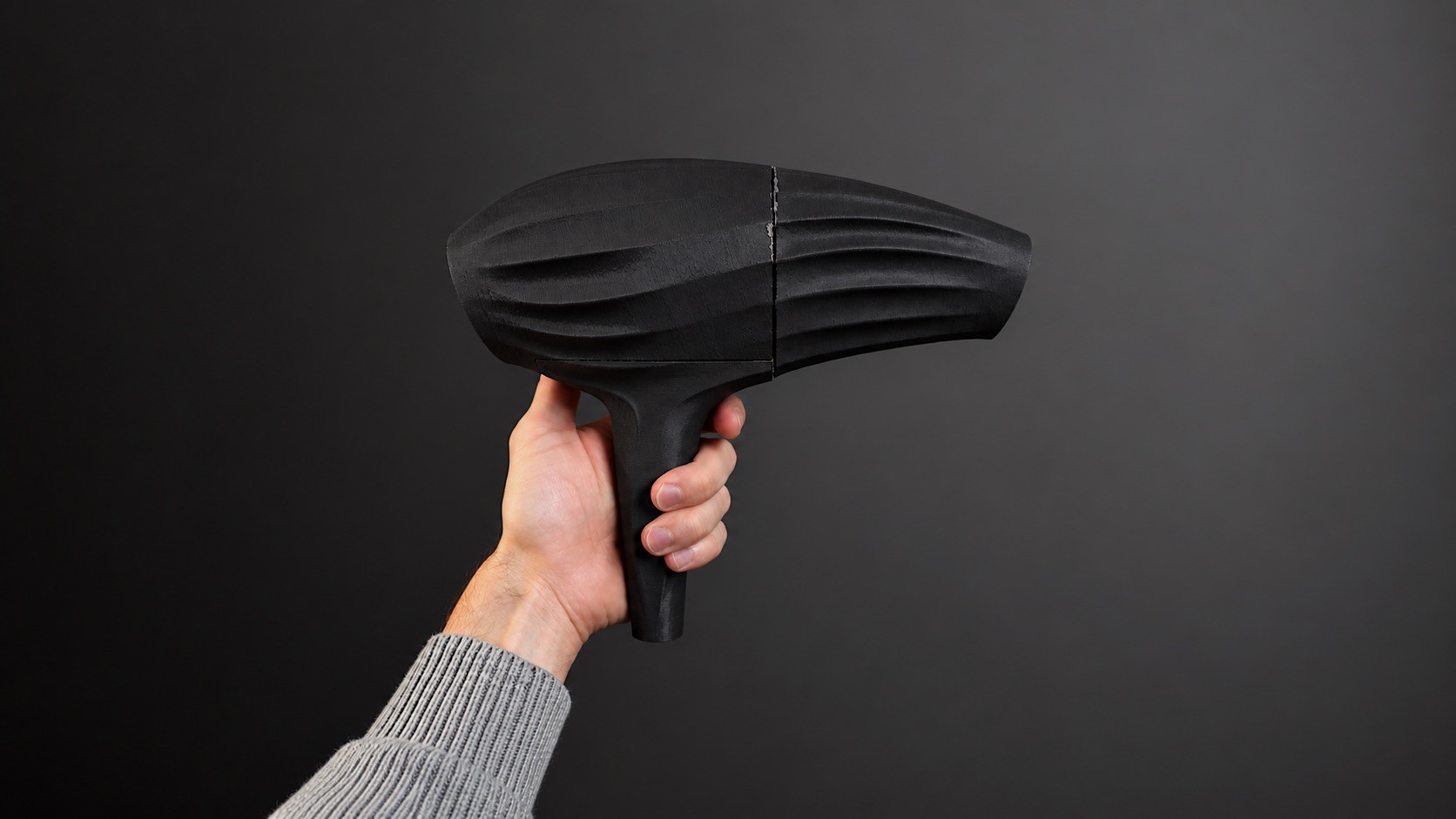
The components were not negotiable, so the mass moved instead of shrinking. The balance point sits back over the wrist, because a full day of salon work is a torque problem rather than a weight problem, and whatever that cost the handle was accepted.
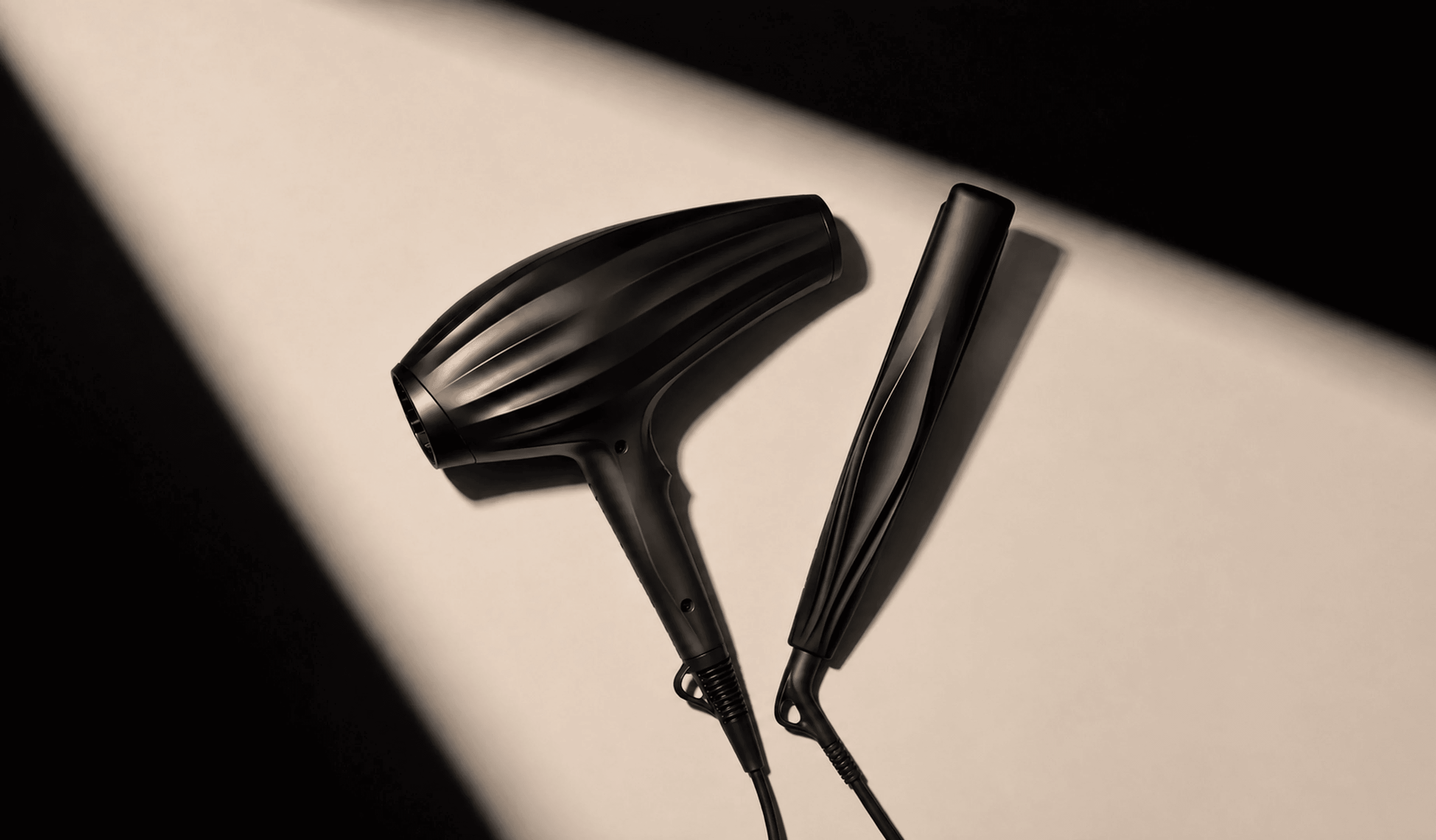
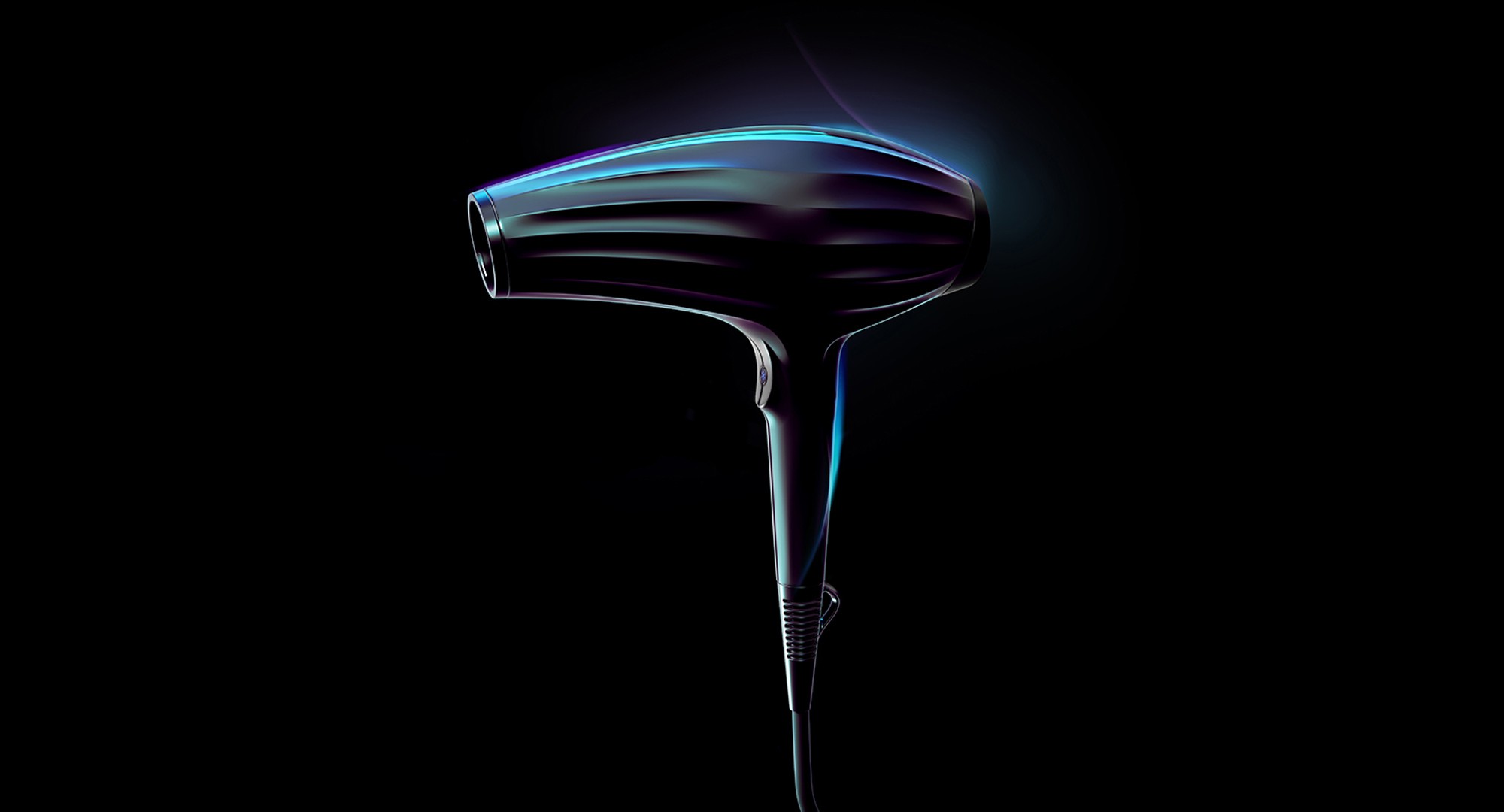
The flowing lines across both housings are the same thinking continued onto the surface. They read as styling and they are grip. Their placement came out of ergonomic study, so a hand that has been working all day finds a ridge wherever it lands, and something to lever against once the grip goes.
Two things fought that, and the work was balancing them against each other. The first is that a dryer and a straightener are not held the same way. A dryer is pointed, carried at arm's length and turned in the wrist. A straightener is pinched and drawn down a section. One system of lines had to serve both hands doing different jobs, or the two tools stop reading as one family.
The second is molding. Ridges across a whole housing have to survive draft and parting lines, and an ergonomic study does not care where a part has to split. Every line that mattered for grip also had to be a line the housing could actually be molded with, and the ones that could not were moved until they were.

Finish
Matte-black molded housings, metal grille and plates, backlit touch interface. Black only.
More work