Client
Restful
Category
Lighting, bedside circadian
Year
2025, announced 2026
Scope
Industrial design, form development, CMF
Channel
DTC
Constraint
The science of how light wavelengths affect circadian rhythm gets genuinely complex, and a normal consumer can't be expected to follow it.
So the problem was packaging that technology into something that feels premium in a home, stays understated enough to sit in a wide range of interiors, and is so easy to operate that your grandmother can use it without instruction.

Decision
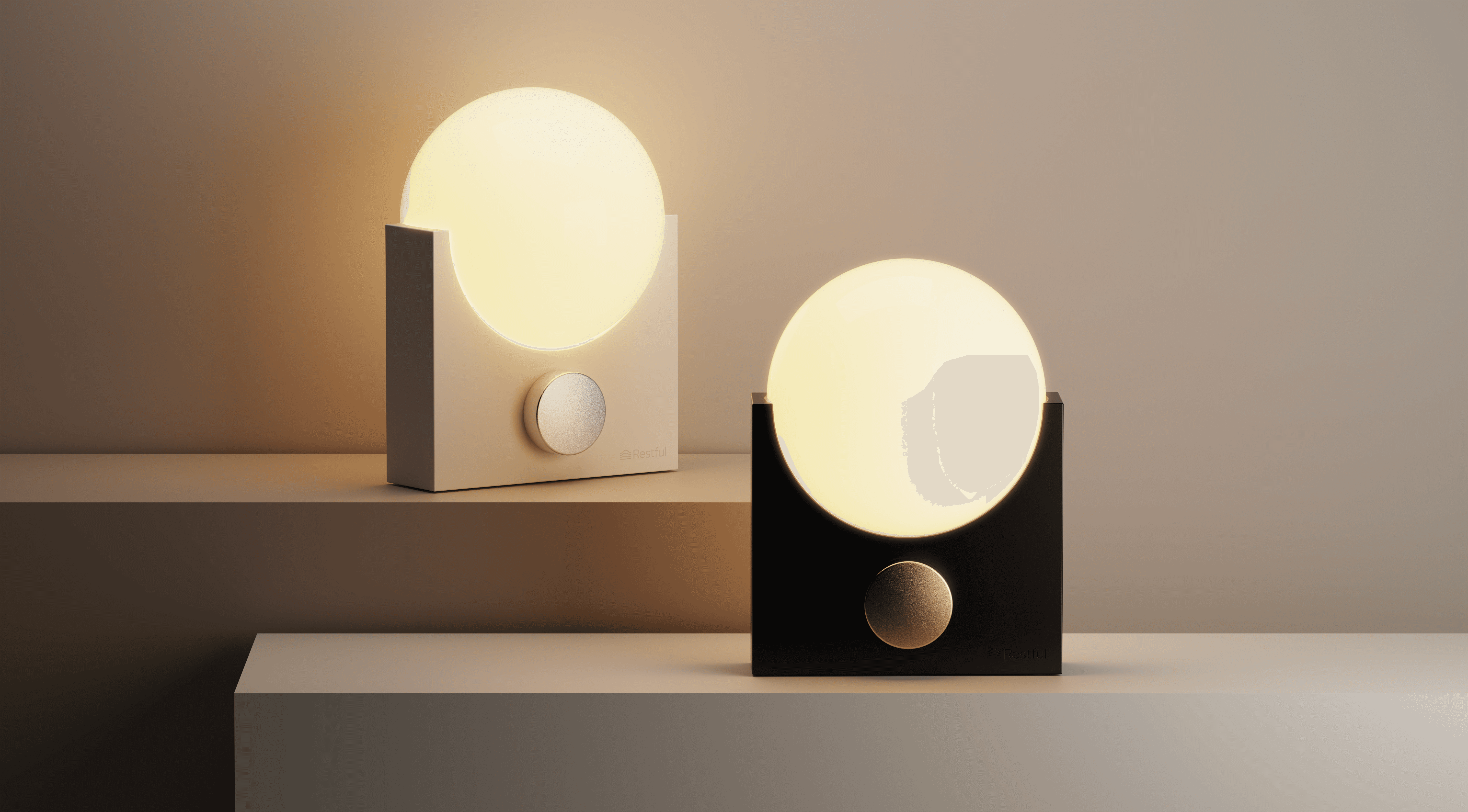
Everything went into one knob. Tap it to turn the light on and off, twist it to change intensity. That is the entire interface, and a knob is one of the few controls every age group already understands without being taught.
The rest is handled out of sight. Color and wavelength are worked out by the product from your location and from how you actually use it, rather than being surfaced as settings for someone to get wrong. There is an app for anyone who wants one, but nothing about owning the light requires it. No screen.
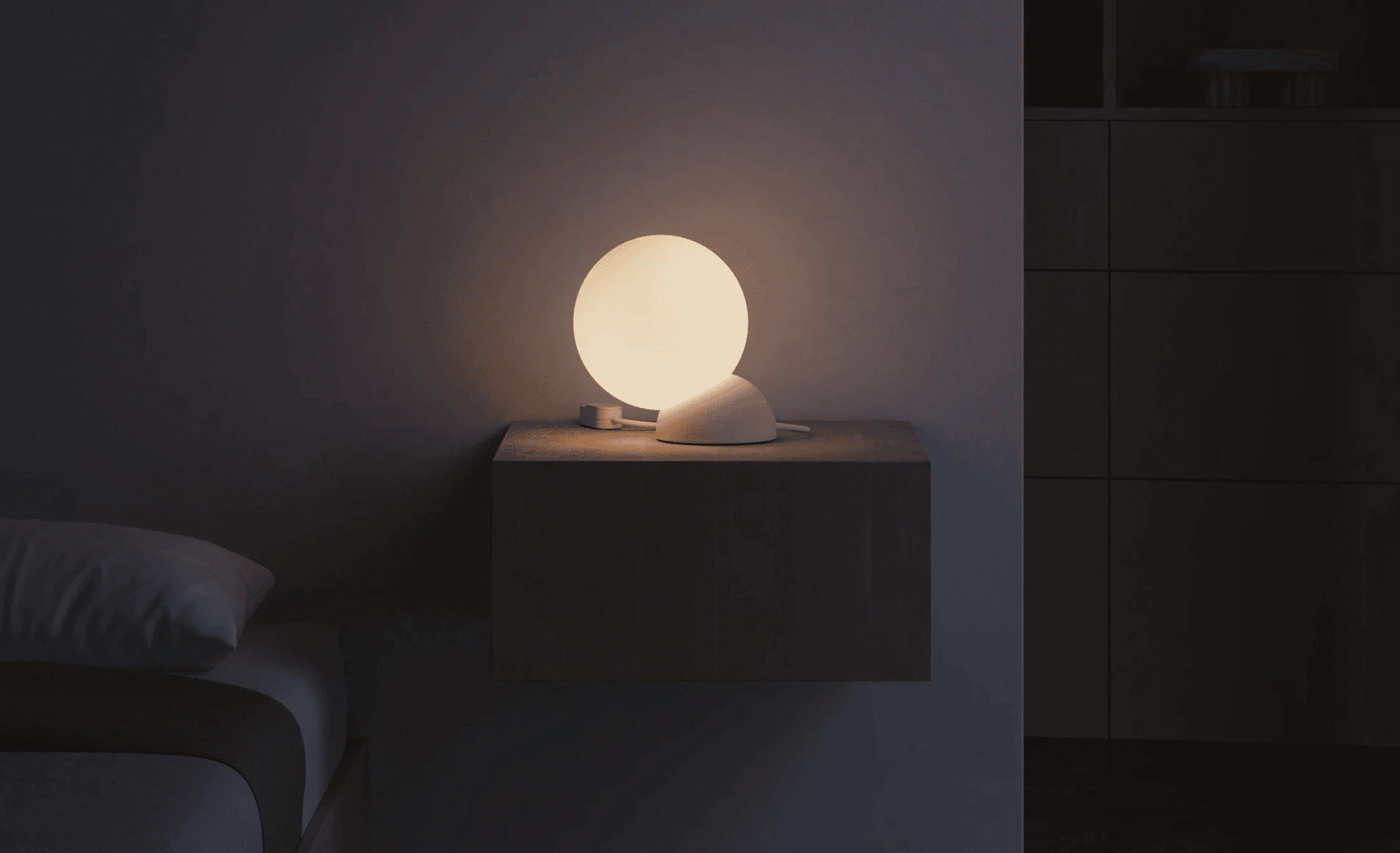
The form follows the same reasoning. A sphere on a block, which reads as an object in a bedroom rather than as a device. Circadian lighting sits close enough to health technology that it could easily have looked clinical, and looking clinical is what keeps a thing off a nightstand.
Simple shapes also spend the budget where it registers. Glass, cast aluminum and a machined dial on plain geometry read as expensive in a way that complicated geometry in cheaper materials never does.

Finish
Glass diffuser globe, die-cast powder-coated aluminum base, machined anodized dial. Black and brass, or off-white and silver.

More work